
€22M affordable living project

€22M affordable living project

PFI Alliance is proud to sponsor its in-house property development platform, Nuvobis Developments, focused on delivering high-quality, affordable housing across the Andalucía region of Spain.

Together with our equity partners and a leading Spanish bank, we are currently investing €22M in the development of a 120-apartment residential project in Estepona, Costa del Sol.

Construction is scheduled to commence in June 2026, with homes delivered to clients under the Spanish VPO affordable housing program in the first quarter of 2028. This project reflects our long-term commitment to responsible development, social impact, and sustainable value creation.

€58M hotel development in Madrid

PFI Alliance, in collaboration with our investment partners, has committed €17M in equity to acquire an office building in Madrid for full redevelopment.

By the end of 2027, the property will be transformed into a high-end business hotel, with an experienced operator already secured. The project is expected to achieve an estimated sales value of €58M.

This flagship PFI Alliance redevelopment highlights our ability to unlock value through strategic repositioning, targeting investor returns exceeding 200% following project delivery within a 20-month development timeline.

€3M bridge for plot in Mijas

Property Finance International (PFI) in collaboration with partners Narval and Urbanitae have organized a €3M financing for a plot destined for a luxury new construction project in Mijas, Costa del Sol, Spain. The client had a previous bridge loan that needed refinancing from a new lender. After 3 months of negotiations we managed to sign a favourable deal for the client.

Financing €7.4M villa purchase in Ibiza

For a Madrid based client Property Finance International (PFI) have organized €7.4M in a debt solution for the purchase of a villa in Ibiza. This was a challenging project involving purchasing the company that owns the villa from a bankrupcy estate and organizing extra funding paying tax debts and other fees involved. After 4 months of negotiations PFI, in collaboration with our partners Sego Finance and financial group Phinom managed to succeeded in the total financing asked by the client.

Financing affordable living in Spain

Property Finance International (PFI) is engaged in organizing financing for property developers in the government controlled affordable living projects in Spain, the so called VPO  (Viviendas de Protección Oficial) program. The first developer to receive financing through us is Nuvobis Living (www.nuvobis.com) who are aiming at starting 10 projects per year in the Spanish Andalucia region. Affordabe apartments will be produced both to sell and to rent, in projects between 80 – 150 apartments and an average total cost of €15-20M. PFI are organizing both equity and debt to developers focusing on multi family projects. Since the affordable living crisis in Spain is now on critical levels, we are very proud to support property developers with financing their affordable living projects.

€10M Refinancing of hotel in Palma de Mallorca

We are happy to announce the successful €10M refinancing of one of the leading boutique hotels in Palma de Mallorca. The purpose was to exchange a cash flow heavy bank loan with an interest only long term private banking mortgage. Due to this successful operation the hotel owner can now focus their cash flow on other important development projects.

_________________________________________________________________________________________

Contact us for more information here.

German Property Crisis Amid Decline in Foreign Investment

35% – that’s the staggering decline in foreign buyers’ share of commercial property purchases in Germany during the first quarter of this year, according to a report from BNP Paribas Real Estate. This figure is the smallest result since 2013, down from 37% of transaction volumes in the German commercial property market in 2023. The investment drop is driven by several factors, including high inflation and fears of an impending recession in Germany.

Despite the economy performing better than expected in the first three months of the year, with GDP up 0.2%, experts believe that structural issues will continue to hamper the country’s economic output. The German property market, long considered an attractive investment destination, is now facing a crisis as overseas investors shy away from the market.


Key Takeaways

  • Foreign buyers accounted for only 35% of commercial property purchases in Germany during Q1 2023, down from 37% in 2023.
  • High inflation and recession fears are driving the decline in foreign investment in the German property market.
  • Although Germany’s GDP grew 0.2% in the first quarter, experts believe structural issues will continue to hamper the country’s economic output.
  • The German property market’s appeal as an investment destination is waning due to the current economic climate.
  • The decline in foreign investment is a significant challenge for the German property sector.


High Interest Rates and Economic Uncertainty Deter Overseas Investors

German Property

The German real estate market has experienced a significant decline in foreign investment, with foreign buyers responsible for only 35% of commercial property purchases in the first quarter of 2023, according to a report from BNP Paribas Real Estate. This is a smaller result than any year since 2013 and comes after foreign investors accounted for 37% of transaction volumes in German commercial property in the previous year.

Foreign Buyers Account for 35% of Commercial Property Purchases

The drop in foreign investment is driven by a number of factors, including high interest rates and economic uncertainty that are deterring overseas investors from the German real estate market. The BNP Paribas Real Estate report highlights that high inflation and fears of a potential recession in Germany are also contributing to the decline in foreign investment in commercial property.


Germany’s Sluggish Economic Performance

Despite the economy performing better than expected in the first three months of the year, with GDP growth of 0.2%, experts believe that structural issues will continue to hamper Germany’s economic output. The country’s economy actually shrank by 0.3% in both the fourth quarter and over the whole of 2023, making Germany the worst performing major economy on a global scale last year.

The sluggish economic performance in Germany can be attributed to a variety of structural issues that have been plaguing the country. While the economy managed to eke out modest growth in the first quarter, the overall trend points to continuing challenges for Germany’s economy.


Factors Contributing to Germany’s Downturn

The downturn can partially be explained by pointing to Europe’s energy crisis, as Germany’s industrial sector was heavily dependent on Russian fuel. Even so, there are more stubborn problems set to hamper future growth.

Europe’s Energy Crisis and Dependence on Russian Fuel

The reliance on Russian fuel has been a significant factor in Germany’s economic decline, as the country grappled with the fallout from the energy crisis that swept across Europe.

An aging population, a lack of public investment, overzealous bureaucracy, and sluggish productivity are all contributing to Germany’s downturn. These structural issues have proven to be stubborn challenges, hindering the country’s ability to bounce back from the economic turmoil.


German Property Market’s Attractive Factors

While some of the issues plaguing the German economy were present during the decade preceding the pandemic, the German property market has historically boasted a number of attractive factors that drew in investors. Low unemployment rates, economic stability, and low interest rates notably boosted the country’s profile as a desirable real estate destination.

Germany’s “Labour Market Miracle” from 2005 to 2019

According to the Center for Economic and Policy Research, Germany experienced a remarkable “labour market miracle” starting around 2005. During this period, employment in the country increased by more than 15%, rising from 39.3 million people in 2005 to 45.3 million in 2019. This impressive labor market performance, coupled with the nation’s economic stability and low borrowing costs, contributed to the German property market’s appeal for foreign and domestic investors alike.


Failure to Adapt to Technological Advancements

Real Estate Property

Compared with its European peers, Germany emerged relatively unscathed from the financial crisis of 2008, although productivity did begin to dip. Some experts argue its present troubles are caused to some extent by Germany’s failure to fully capitalize on technological advancements, combined with a shift towards low-productivity sectors.

As the world rapidly embraces digital transformation, Germany has struggled to keep pace. While other nations have leveraged technological advancements to drive innovation and boost productivity, Germany appears to have been left behind. This inability to adapt has become a significant factor in the country’s economic woes, as it fails to fully capitalize on the benefits of emerging technologies.

The shift towards low-productivity sectors, such as services and retail, has also contributed to Germany’s challenges. As the economy moves away from its traditional manufacturing base, the country has found it increasingly difficult to maintain its competitive edge. This structural change, coupled with the lack of investment in technological advancements, has created a perfect storm of economic stagnation.

Addressing this failure to adapt will be critical for Germany’s future economic success. Policymakers must prioritize investment in technology, education, and innovation to ensure the country can keep pace with its global competitors and regain its position as a leading economic powerhouse.


German Property Market Structure

As much as Germany’s economic challenges may deter investors, the structure of the nation’s property market can also pose barriers to investment. Unlike more centralized countries like France and the UK, Germany’s economic strength is spread across multiple cities such as Berlin, Munich, Hamburg, Frankfurt, and Cologne. This decentralized approach means that Germany lacks a stand-out investment hub, which is often the preferred destination for investors seeking to deploy their capital.

The absence of a dominant real estate center in Germany can be both a blessing and a curse. While it ensures that economic opportunity is not concentrated in a single location, it also prevents the formation of a critical mass of activity that could attract significant foreign investment. Investors often gravitate towards markets with clear leadership and a well-developed ecosystem of supporting services, something that Germany’s diffuse property landscape currently lacks.


Residential Construction Sector Struggles

Residential Property

As cost pressures persist and construction sector prices remain high, experts are not expecting a strong increase in housing demand this year. The residential construction sector, a crucial component of the German property market, is facing significant challenges that could have far-reaching implications.

Over Half of Companies Report Lack of Orders in April

A report from the IFO institute published earlier this month reveals a concerning trend in the residential construction sector. In April, more than half of the companies (55.2%) in Germany’s residential construction sector reported a lack of orders, indicating a slowdown in demand for new housing projects.

Construction Companies Report Cancellations

On the other hand, the struggles in the residential construction sector are further exacerbated by the reports of cancellations from building construction companies. Some 17.6% of these companies reported cancellations in April, down from 19.6% in March, but still a significant concern for the industry.


What is the Impact on the Housing Market?

The struggles faced by the residential construction sector in Germany are expected to have a negative impact on the housing market. As cost pressures persist and construction sector prices remain high, experts anticipate a weak increase in housing demand this year. This slowdown in the construction industry is likely to reverberate across the broader housing market, creating challenges for potential homebuyers and investors alike.

The decline in new residential construction projects, coupled with the cancelation of existing orders, suggests that the impact on the housing market may be significant. Prospective homeowners may find it increasingly difficult to find suitable properties, leading to a potential decrease in home sales and further pressure on property prices.

Moreover, the impact on the housing market could extend beyond the residential sector, as the overall economic uncertainty and high inflation rates continue to weigh on consumer confidence. This could lead to a broader slowdown in the real estate industry, affecting both commercial and residential segments.


Conclusion

The German property market is facing a significant crisis as foreign investment declines due to high interest rates, economic uncertainty, and other structural issues impacting the country’s overall economic performance. The lack of a standout investment hub, sluggish technological adaptation, and challenges in the residential construction sector are all contributing to this downturn.

As the country grapples with these issues, it will be crucial for policymakers and industry stakeholders to develop strategies to address the underlying structural problems and restore confidence in the German property market. The path forward will require a multifaceted approach that addresses the various drivers of the current crisis and positions the market for long-term sustainable growth.

Contact us here if you have a question:

Share
Share
Share

Evolving Real Estate Investment Landscape in Newcastle

Did you know that Newcastle’s commercial real estate market saw transactions worth £175m in 2023? This was despite very low availability of properties. Investors are wisely positioning themselves to use the growing opportunities.

The market is changing in significant ways. People are moving towards better quality spaces. They’re also finding new uses for offices. The retail and leisure areas are being refreshed, and the industrial sector is growing. Altogether, this is transforming Newcastle’s real estate scene.

Newcastle

Key Takeaways

  • Newcastle’s commercial real estate market continues to witness a flurry of activity, with over £175m transacted in 2023 despite record lows of stock availability.
  • Savvy investors are strategically positioning themselves to capitalize on the city’s burgeoning commercial real estate market, driven by evolving trends and market dynamics.
  • Key drivers shaping Newcastle’s market include the flight to quality, the reinvention of the office, the revitalization of the retail and leisure sector, and the growth of the industrial market.
  • The commercial real estate landscape in Newcastle is undergoing a profound transformation, presenting a myriad of opportunities for investors willing to navigate the evolving landscape.
  • Investors are placing a premium on quality assets that offer sustainable returns and long-term value, driving the flight to quality across various sectors.


Investors’ Pursuit of Prime Assets

Today, in the real estate investment in newcastle world, smart investors are going after top-notch assets. They look for places that will pay off well over time. This interest in quality is visible in offices, retail real estate, industrial, and warehousing spaces.


  • Premium Demand for High-Rated Office Properties

Top office spaces are in great demand, especially if they are rated B+ in energy performance. Such properties sell for high prices. On the other hand, those with lower ratings sell for much less. This demand isn’t just from investors. People looking for office space prefer Grade A locations in the heart of commercial property newcastle.


  • Retail Assets Offering Stable Returns

In the retail market, the recent sale of 123-125 Northumberland Street is a good example. It was bought at a 6.09% yield. This sale spotlights the ongoing interest in retail real estate with solid returns.


  • Modern Industrial Facilities on Major Thoroughfares

Industrial properties along the A1(M) and A19 are catching investors’ eyes. Their potential for growth is strong, due to the low number of new developments. There is a big demand for these industrial spaces, especially for those with enough power and good environmental standings.

Commercial Property Highlights
  1. Real estate investment in newcastle
  • Investors placing a premium on quality assets offering sustainable returns and long-term value
      2. Property development               newcastle
  • Shortage of available stock, with low vacancy rates driving upward pressure on rents
     3. Newcastle property                        prices
  • Prime office rents reaching new benchmarks, reflecting strong occupier demand for high-quality spaces


Reinvention of the Office: Catering to Modern Needs

The commercial real estate scene in Newcastle is changing fast. Tenants now look for top-notch work environments that meet their changing needs. For example, there’s a new high for rent in the city, reaching £32 per square foot at Bank House.


Premium Rents for High-Quality Workspaces

Tenants in Newcastle are ready to pay more for high-quality offices. The city’s property development sector meets this need with state-of-the-art spaces focused on making employees happy and productive.


Emphasis on Communal Spaces and Amenities

Additionally, One Strawberry Place and similar projects focus on great communal areas. They aim to encourage teamwork, innovation, and a sense of belonging among workers. Such designed spaces help attract and keep top employees, leading the trend in newcastle property prices and office evolution.

The need for adaptable office areas and the lack of available coworking spots is changing Newcastle’s commercial property market. This is creating chances for both investors and developers to make their mark.


Retail and Leisure: Revitalizing Newcastle’s Cityscape

Newcastle’s retail and leisure scene is getting a big boost. These real estate investment in newcastle efforts are drawing a lot of interest hence why many businesses are looking at these prime spots in the city.


Monument Mall and Pilgrim Quarter Developments

Newcastle Monument Mall
Source: https://www.baasl.co.uk/projects/monument-mall-newcastle/

The development at the Monument Mall and Pilgrim Quarter is key. These retail real estate efforts are very popular and many businesses are eager to be part of the city’s renewed energy.

Lastly, Newcastle’s sought-after spots are hot among businesses. This shows the city is very attractive for companies which made it clear that Newcastle is becoming a top choice for retail and leisure places.


Industrial Market: Fueling Growth and Opportunities

Newcastle’s industrial sector is booming, attracting businesses who want ideal locations and the latest features. Despite new buildings being made, there’s very little big space for them. Vacant places above 50,000 sq ft are rare, just 2.37%. This makes Newcastle one of the hardest places in the UK to find such spaces.

Demand from businesses remains strong. Seven out of eight large newbuild units in Sunderland are already taken. Rents for new spaces are expected to go up, now between £8 and £10 per sq ft. This increase is due to high inflation, rising building costs, and the limited number of new properties available.

Many companies are looking for new, modern industrial spaces in Newcastle. This has created great chances for people to invest in the city’s real estate and properties in the industrial sector. With space in Newcastle getting tighter, those who invest smartly stand to gain. The industrial market offers a bright future for investors.

  • Key Metrics
  • Newcastle Industrial Market
  • Vacancy Rate for Units Over 50,000 sq ft
  • 2.37%
  • Prime Rental Range
  • £8 – £10 per sq ft
  • Speculative Development Activity
  • Ongoing, but constrained by limited pipeline
  • Occupier Demand
  • Robust, with pre-let agreements securing new stock


Conclusion: Capitalizing on Newcastle’s Dynamic Real Estate Market

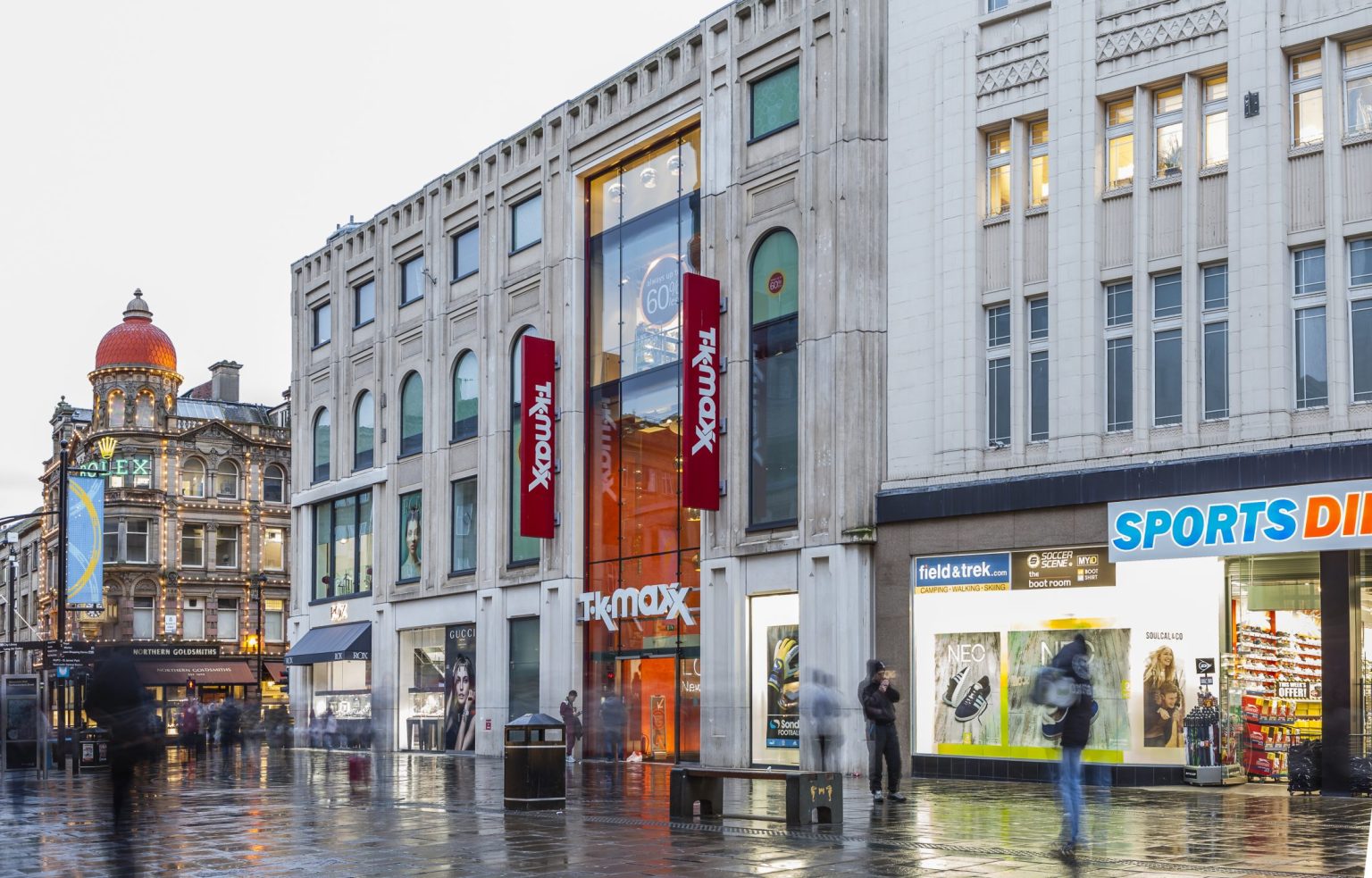
Newcastle bustling street with retail buildings

Newcastle offers plenty for those looking to invest in real estate. The push for better quality spaces is attracting more investment in the city’s commercial property that is why this trend is leading to increased investor interest.

As the real estate market in Newcastle is always changing, those who can spot the new trends can benefit a lot. This includes the growth of the industrial market and changes in the office space and Newcastle is becoming a hot spot for smart investors and property investors.

To make the most of real estate opportunities in Newcastle, it’s important to keep an eye on market changes. That’s why, you should strategically invest in the city’s real estate market to find great rental properties and property investment deals. This approach opens up many chances to succeed in Newcastle’s real estate world. Talk to experts today! 

Contact us here if you have any question:

Share
Share
Share

How London is Driving the Recovery of European Real Estate

Did you know that last year, London’s commercial real estate market saw rents rise for the first time during a property recession? This resilience in the face of turbulent market conditions is a testament to the UK capital’s enduring prominence as a global powerhouse in the European real estate industry.

Despite the recent challenges faced by the property investment in Europe, London’s dominant role in commercial real estate has positioned it as the prime market leader in the continent’s recovery. What sets London apart and makes it the driving force behind this resurgence?

London’s commercial real estate market is a mature and well-established institutionally traded sector, with UK pension funds playing a dominant role. Investors also benefit from relatively low entry and transaction costs, as well as transparent pricing and valuation processes, allowing for swift repricing during market changes. Entering the recent downturn from a position of strength, with low vacancy rates, London is now seeing rents rise, indicative of its underlying resilience and attractiveness in the European property markets.

Key Takeaways

  • London’s commercial real estate market is a mature and well-established institutionally traded sector, with UK pension funds playing a dominant role.
  • Investors benefit from low entry and transaction costs, as well as transparent pricing and valuation processes, allowing for swift repricing during market changes.
  • London entered the recent downturn from a position of strength, with low vacancy rates, and is now seeing rents rise for the first time during a property recession.
  • London’s resilience and attractiveness have positioned it as the prime market leader in the recovery of the European real estate industry.

London’s Prominence as a Global Real Estate Hub

London

London’s prominence as a global powerhouse in real estate is not a new phenomenon; it’s a narrative that has endured through the ages. The city’s real estate market has long been a beacon of stability and opportunity, attracting investors from around the world who seek to capitalize on the unique advantages it offers.

  • Historical Narrative of Enduring Power

London’s real estate dominance is deeply rooted in its rich history as a global financial and commercial center. Over the decades, the UK capital has solidified its position as a prime destination for property investment, with a well-established and institutionally traded commercial real estate sector that has set industry standards and attracted a diverse pool of investors.

  • Resilience Amidst Recent Market Turbulence

Despite the recent turbulence in the market, with rising interest rates, increasing debt costs, and questions surrounding the role of the office, London has demonstrated remarkable resilience. As interest rates stabilize and office occupancy remains strong, the city is now leading the charge in Europe’s real estate recovery. This resilience is a testament to the fundamental strengths of the London real estate market, which continue to draw the attention of global investors.


Factors Behind London’s Position of Strength

Decades of recognition as a premier destination for capital investment have solidified the city’s position, with UK pension funds playing a dominant role and setting standards for long leases and investment norms. This institutional strength has been a key driver of London’s enduring appeal to European real estate investors and developers.

  • Low Entry and Transaction Costs

Compared to other global commercial real estate hubs, London offers relatively low entry and transaction costs, making it an attractive proposition for property investment in Europe. This accessibility is a significant factor in drawing a diverse range of investors, from European commercial real estate firms to global players seeking exposure to the London’s dominant role in commercial real estate.

  • Transparency and Data Availability

Transparency is another hallmark of London’s real estate market, with investors benefiting from clear and readily available data. This allows for informed decision-making and a sense of security, further bolstered by the strong quality of advice available to those navigating the European property markets and European residential real estate landscape.

  • Swift Repricing Mechanism

One of the reasons London has stood out to investors during the recent period of market uncertainty is its swift repricing mechanism. Thanks to transparent pricing and valuation processes, the real estate in Europe sector in London has managed to reprice itself faster than other markets across the continent and globally over the past 18 months. This agility has been a key factor in maintaining the city’s position as a European property development and European real estate trends leader.


Who is Investing in Central London?

central london

London’s appeal as an investment destination extends across the globe. Investors from Europe, the Middle East, Asia, and the US are actively participating in the European real estate market. Family wealth, particularly from Spain, Switzerland, and Germany, has been notably active in acquiring assets across central London. These investors are often equity-heavy, seeking opportunities in the adjusted pricing landscape without heavy reliance on debt.

  • Global Investors from Europe, Middle East, Asia, and US

The property investment in europe landscape has seen a diverse array of global investors drawn to the vibrant european commercial real estate market in central London. These investors, hailing from key regions like Europe, the Middle East, Asia, and the United States, have recognized the city’s position of strength and are actively participating in the market.

  • Family Wealth from Spain, Switzerland, and Germany

Interestingly, family wealth from countries such as Spain, Switzerland, and Germany has been particularly active in acquiring prime properties across central London. These who is investing in central london? investors often carry a strong equity-focused approach, seeking to capitalize on the adjusted pricing environment without heavily relying on debt financing.

  • Australian Pension Funds and Japanese Investors

The london’s dominant role in commercial real estate has also attracted the attention of international investors, including Australian pension funds and Japanese investors. The market’s european property markets resilience and european residential real estate potential have made it a prime destination for these global players, further emphasizing London’s appeal as a real estate in europe and european property development hub.


London’s Dominant Role in Commercial Real Estate

Real estate

London’s leading role in the commercial real estate recovery stems from its institutional strength, transparent market dynamics, and resilience amidst macroeconomic challenges. 

Institutional Strength

The market’s institutional strength has been a key factor in London’s dominance. UK pension funds, which have maintained a strong presence in the commercial real estate sector, have helped establish robust investment norms and long-term leases. This institutional framework has provided a solid foundation for the market, contributing to its stability and appeal for global investors seeking opportunities in European real estate.

Transparent Market Dynamics

Transparency is another hallmark of London’s commercial real estate market. Investors benefit from clear and readily available data, allowing for informed decision-making and a sense of security when participating in the property investment in Europe. This transparency, coupled with the strong quality of advice available, has helped London maintain its position as a leading European commercial real estate hub.


Conclusion

As the European property markets continue to evolve, London stands as a beacon of stability and opportunity, driving the recovery of the continent’s real estate sector. The city’s residential real estate and property development sectors have also demonstrated resilience, further solidifying London’s dominant role in the European real estate landscape.

In conclusion, London’s unwavering position as a global real estate powerhouse is a testament to its adaptability, institutional strength, and unparalleled investment appeal. As the European real estate trends continue to unfold, the UK capital remains poised to lead the way, cementing its status as the premier destination for property investment in Europe.

Contact us if you have any question:

Share
Share
Share

European Real Estate Outlook Q1 2024

Did you know that the European real estate market has endured a seventh consecutive quarter of value declines? Despite this challenging landscape, the sector is poised for a potential rebound, as the sharp rally in European listed real estate investment trusts (REITs) during the latter part of 2023 suggests that negative pressures on direct real estate values are easing. As the European economic outlook grapples with recession-like conditions, a slow recovery is expected in 2024, with inflation projected to return to target in the second half of the year and the European Central Bank likely to cut interest rates. 

The European property market has faced a long period, with the eurozone experiencing contraction in economic growth during the fourth quarter of 2023. However, there are glimmers of hope on the horizon, as the residential properties in Europe and key sectors like office, retail, and logistics have shown resilience, showcasing the potential for real estate investment in Europe.


Key Takeaways

  • The European real estate market has seen a seventh consecutive quarter of value declines, but there are signs that values will begin to stabilize as 2024 progresses.
  • The European economic outlook suggests that the region is experiencing recession-like conditions, with a slow recovery expected in 2024.
  • The sharp rally in European listed real estate investment trusts (REITs) during the latter part of 2023 indicates that negative pressures on direct real estate values are easing.
  • The commercial real estate in Europe sector has shown resilience, with strong rental growth in office, logistics, and residential markets.


Eurozone Real Estate Market Overview

European Real Estate Outlook

The European real estate market has navigated a challenging period, with the European real estate market entering a seventh quarter of decline in the fourth quarter of 2023. Values fell a further 3.5% over the three-month period, and the average peak-to-trough decline is now 17%. However, there are signs that real estate values will begin to stabilize as 2024 progresses.


Value Declines and Valuation Lags

Despite the value declines, valuations still lag market pricing by around 8%. This suggests that the market has potentially overshot on the downside, and there is an opportunity for a correction as the year progresses.


REIT Performance and Market Sentiment

The sharp 25% rally in European-listed REIT performance during November and December 2023 cooled off in early 2024, but the rebound indicates that negative pressures on direct real estate values are easing. This improvement in market sentiment is a positive signal for the European real estate market going forward.


Yield Spreads and Relative Value

Weighted average European prime real estate yields have increased from 4.3% in June 2022 to 5.4% in December 2023, and the spread between prime real estate yields and government bond yields is now 260 basis points. This suggests that core real estate is moving back to a position of relative value compared to other asset classes.


Operational Performance Highlights

In the office market, prime rents increased by 8% in 2023, demonstrating the continued demand for well-located and energy-efficient workspaces. Similarly, the logistics market experienced a 7% rise in prime rents, highlighting the resilience of this sector amidst the broader economic climate.

Turning to the retail sector, real estate investment trusts (REITs) have been reporting healthy like-for-like rental growth, defying the challenges posed by the cost-of-living crisis and maintaining a strong footing in the market.

The residential market has also exhibited resilient fundamentals, with vacancy rates across the top 30 European cities estimated to be just 3%, down from a peak of 4% in 2021. Furthermore, open-market European residential rents are projected to grow at a steady 3% per annum over the coming years, underscoring the continued appeal and stability of this sector.


Office Market Trends

Office Buildings

The European office market continues to navigate a dynamic environment, with rising vacancy rates and signs of structural oversupply. European office vacancy rates are rising steadily, up by 10 basis points to 8.5% in the fourth quarter of 2023, still just short of the long-term average. A combination of weaker economic fundamentals and structural oversupply, resulting from hybrid working, is biting.


Vacancy Rates and Structural Oversupply

Competition from occupiers consolidating into well-located and energy-efficient buildings means the prime end of the European office market remains undersupplied, with headline rents rising 8% over the year to the fourth quarter of 2023.


Rent Growth and Investment Activity

However, investment in offices dropped sharply to represent just 26% of total investment in the fourth quarter of 2023, the lowest office investment share on record, as investors are reducing office allocations.


Yield Expansion

Prime net initial office yields increased by 90 basis points over the year to the fourth quarter of 2023, to a weighted average of 5%, reflecting the rising office vacancy rates and cautious investor sentiment.


Metric

                         Q4 2023

                    Change YoY

European Office Vacancy Rates

                                8.5%

                            +10 bps

Prime Office Rent Growth                   

                                    8%

                                  N/A

Office Investment Share

                                 26% 

                                     –

Prime Office Yields

                                   5%

                             +90 bps


This data suggests that the European logistics market has begun to stabilize after a sharp post-pandemic slowdown.

Tenants are still taking a cautious approach to signing new leases, but the latest available take-up data for the third quarter fell by only 9% year-on-year, a notable improvement from the 32% drop in the second quarter. Vacancy rates remain low at around 5%, and the availability of best-in-class warehouses is scarce. Completions are expected to fall to 4% of stock this year.


Conclusion

The European real estate market is navigating a challenging period, with recession-like conditions persisting and a slow recovery expected in 2024. However, there are signs that values will begin to stabilize as the year progresses, and the relative attractiveness of real estate is improving as yields rise and interest rates potentially start to fall. Operationally, the real estate sectors have shown resilience, with strong rental growth in office, logistics, and residential markets.

While debt refinancing challenges remain, most borrowers have been successful in managing their loan maturities so far. For investors with equity to deploy, both opportunistic and core strategies in the European real estate market could present compelling investment prospects in the coming months. The European real estate outlook suggests a cautiously optimistic sentiment, with potential real estate investment opportunities emerging as the market navigates the current economic landscape.

By carefully evaluating the market trends and fundamentals, investors can position themselves to benefit from the European real estate outlook and the resilience demonstrated by the various real estate sectors. Talk to an expert today!

Contact us here if you have a question:

Share
Share
Share